 |
|
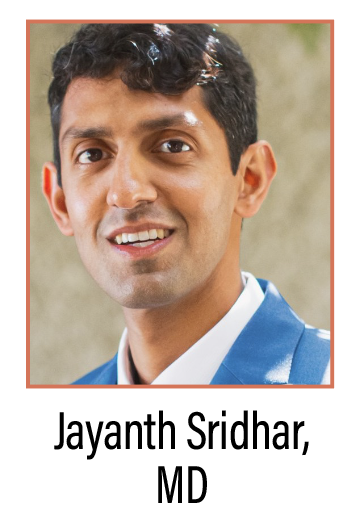
Bio Dr. Sridhar is an associate professor of clinical ophthalmology at Bascom Palmer Eye Institute, Miami. DISCLOSURES: Dr. Sridhar is a consultant to Alcon, DORC, Genentech/Roche and Regeneron Pharmaceuticals. |
We live in an age when news travels faster than ever. A major story breaks, emotions run high, and within minutes your feed is filled with commentary. For physicians—who often hold positions of public trust—the temptation to weigh in can be strong. If others can comment, why can’t we? But with opportunity comes risk: What we post in the heat of the moment can have lasting consequences for our careers and reputations.
The past few years have underscored this reality. In 2021, Houston Methodist suspended Dr. Mary Bowden for social media posts about COVID-19 misinformation, including opposing vaccine mandates and promoting unapproved treatments.1 Much more recently, Nasdaq terminated a junior sustainability strategist for posts related to the Charlie Kirk shooting;2 a University of Tennessee assistant professor is facing termination for social media comments implying “the world is better off without him” referencing Kirk’s death;3 and multiple universities have fired or suspended staff—including faculty members and administrators—for insensitive or celebratory comments online after the same event.4 These examples are stark reminders that while social media amplifies our voices, it also magnifies the scrutiny under which we operate.
So how do we navigate this tension? A few guiding principles:
• Know your organization’s policy. Hospitals and medical groups often have explicit rules about online commentary, particularly on sensitive topics. Violating them can have direct consequences—even if you thought you were posting in a “personal capacity.”
• Pause before posting. Ask: could this be perceived as inflammatory, partisan, or insensitive? Could it be shared as a screenshot or taken out of context?
• Separate passion from profession. Advocacy is vital, but clarity is too. If you’re engaging as a private citizen, state it explicitly. When representing your professional role, hold yourself to the same standards you would in the clinic or classroom.
• Remember the permanence of the digital record. Deleted tweets don’t erase impressions. Screenshots often live longer than context.
Social media can be a powerful tool for education, advocacy and connection. But like surgery, timing and precision matter. The scalpel in our hands is not just the words we choose—it’s the judgment of when and how to use them.
In 2025, the challenge isn’t only about having a voice online. It’s about using that voice wisely, with respect for our patients, our colleagues, and the trust that society places in us. RS
1. CBS News. Texas doctor suspended for spreading COVID-19 misinformation. Nov 2021.
2. Reuters. Nasdaq fires employee over social media posts on Charlie Kirk shooting. Sept 12, 2025.
3. WVLT. University of Tennessee assistant professor expected to be fired over posts about Charlie Kirk’s death. Sept 2025.
4. AP. Employees, faculty fired or suspended after Charlie Kirk shooting comments. Sept 2025.